Aluminum CNC machining is a widely used manufacturing process that involves the use of computer numerical control (CNC) machines to shape and fabricate aluminum parts with high precision. Aluminum is a popular material for CNC machining due to its excellent machinability, lightweight properties, corrosion resistance, and strength-to-weight ratio.

|
Material |
Carbon steel, stainless steel,SPCC, SGCC, pipe, galvanized steel , aluminum alloy |
|
Processing |
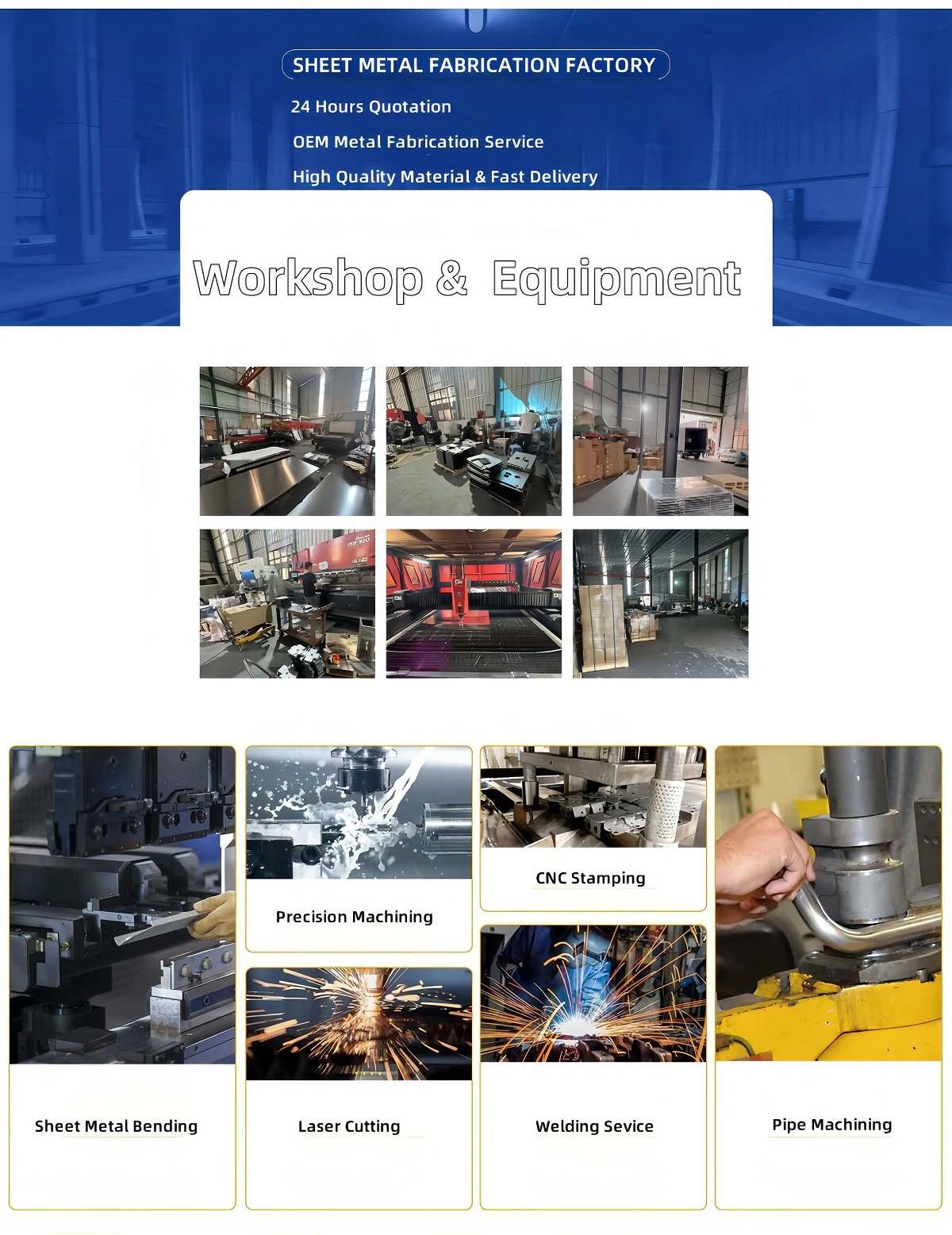
Laser cutting, Bending, Welding, Precision stamping, CNC Punching, Threading, Riveting, Drilling, Assembling, etc. |
|
Thickness |
0.2~20 mm |
|
Tolerance |
+/-0.1mm, 100% QC quality inspection with quality inspection form |
|
Surface Treatment |
Powder coating, Anodizing, Polishing, Brushing, Sandblast, Plating, Silkscreen printing, Zinc chromate, Black Oxide |
|
Drawing Format |
DWG, STEP, SLDPRT, DXF, IGS, 3DS, STL, SKP, AI, PDF, JPG, Draft |
|
Packing |
Wooden Pallet, Wooden case, Bubble wrap, Paperboard, Film, Crate, etc.(As customers' requirement) |
|
Sample Lead Time |
Negotiate delivery time according to your needs |
|
Quotation is according to your drawing(size, material, thickness, processing content, and required technology, etc) |
|

Product Cases


Why Aluminum is Ideal for CNC Machining
1. Machinability: Aluminum is soft and easy to cut, allowing for high-speed machining with minimal tool wear.
2. Lightweight: Its low density makes it ideal for aerospace, automotive, and consumer electronics applications.
3. Corrosion Resistance: Aluminum naturally forms a protective oxide layer, making it resistant to rust and corrosion.
4. Thermal and Electrical Conductivity: Suitable for heat sinks, electrical components, and other applications requiring conductivity.
5. Cost-Effective: Aluminum is relatively affordable compared to other metals like titanium or stainless steel.
CNC Machining Processes for Aluminum
1. Milling: Uses rotary cutters to remove material from a workpiece. Ideal for creating complex shapes, slots, and pockets.
2. Turning: Rotates the workpiece while a cutting tool removes material. Used for cylindrical parts like shafts and rods.
3. Drilling: Creates holes in the aluminum workpiece with high precision.
4. Tapping: Adds internal threads to holes for screws or bolts.
5. Engraving: Adds text, logos, or designs to the surface of the aluminum part.

Advantages of CNC Machining Aluminum
- High Precision: CNC machines can achieve tight tolerances (up to ±0.001 inches or better).
- Repeatability: Ideal for mass production of identical parts.
- Complex Geometries: CNC machining can create intricate shapes that are difficult to achieve with other methods.
- Surface Finish: Aluminum parts can be machined to achieve smooth surface finishes or further treated with anodizing, polishing, or coating.
Packing&Shipping
Package By carton/crate or as per your requirement