

Hey there! As a supplier in the sheet metal fabrication game, I've seen my fair share of different types of dies used in sheet metal stamping. It's a pretty fascinating part of the process, and I'm excited to share some insights with you.
First off, let's talk about what sheet metal stamping is. It's a manufacturing process where flat sheet metal is transformed into different shapes using a die and a press. The die is like a mold that gives the metal its final form. There are several types of dies, each with its own unique function and application.
Progressive Dies
Progressive dies are one of the most common types used in high - volume production. These dies have multiple stations, and as the sheet metal moves through the press, it undergoes a series of operations at each station. For example, at one station, the metal might be punched, and at the next, it could be bent. This continuous process is super efficient, allowing for a large number of parts to be produced quickly.
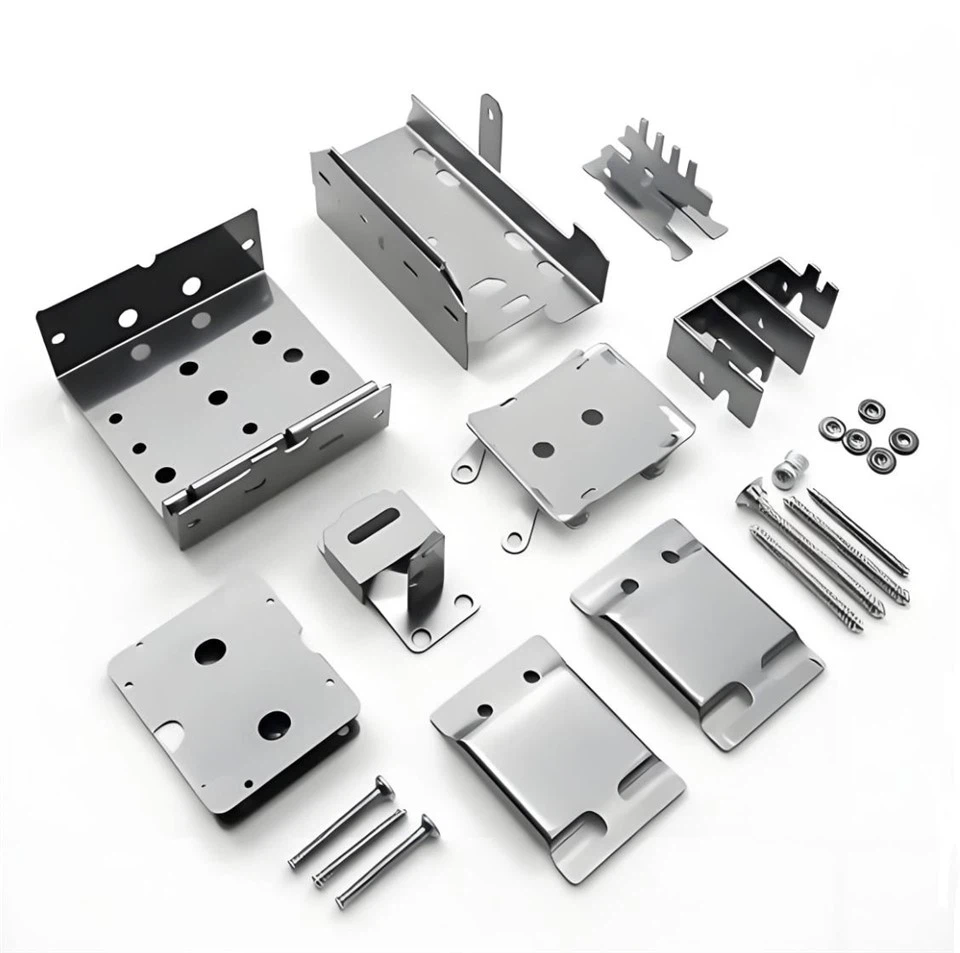

The advantage of progressive dies is that they can produce complex parts in a single pass through the press. This reduces the need for multiple setups and handling, which in turn cuts down on production time and cost. If you're looking for Industrial Metal Fabrication, progressive dies are often a great choice for large - scale projects.
Compound Dies
Compound dies are another important type. Unlike progressive dies, compound dies perform multiple operations simultaneously. For instance, they can punch and blank (cut the outer shape of the part) at the same time. This is really useful when you need to produce parts with high precision and tight tolerances.
The key benefit of compound dies is their ability to create very accurate parts in a single stroke of the press. This is crucial in industries where precision is non - negotiable, such as aerospace and medical device manufacturing. If you're in the market for Precision Sheet Metal Fabrication, compound dies might be the way to go.
Combination Dies
Combination dies are a bit of a hybrid. They combine the features of both progressive and compound dies. They can perform multiple operations in a single stroke, but also have the flexibility to perform different operations at different stations as the metal moves through the press.
This type of die is great for producing parts that require a mix of precision and complexity. For example, parts with multiple bends, holes, and cutouts can be efficiently made using combination dies. They offer a good balance between cost - effectiveness and the ability to produce high - quality parts.
Blanking Dies
Blanking dies are used specifically for cutting the outer shape of a part from a sheet of metal. They are simple in design but very important in the stamping process. The blanked part can then be further processed using other dies or manufacturing techniques.
Blanking dies are often used in the initial stages of production to create the basic shape of the part. They are relatively inexpensive to manufacture, making them a cost - effective option for producing large quantities of simple parts.
Piercing Dies
Piercing dies, as the name suggests, are used to create holes in the sheet metal. These holes can be of various sizes and shapes, depending on the requirements of the part. Piercing dies are used in a wide range of industries, from automotive to electronics.
The accuracy of piercing dies is crucial, especially when the holes need to align with other components in the final product. They can be designed to create single holes or multiple holes at once, depending on the complexity of the part.
Bending Dies
Bending dies are used to bend the sheet metal into different angles and shapes. There are different types of bending dies, such as air bending dies and bottoming dies. Air bending dies use less force and are more flexible in terms of the angles that can be achieved. Bottoming dies, on the other hand, provide more precise bends but require more force.
Bending dies are essential for creating parts with structural integrity. For example, enclosures and brackets often require precise bends to fit together properly. If you're interested in Sheet Metal Fabrication Enclosure, bending dies play a crucial role in the manufacturing process.
Drawing Dies
Drawing dies are used to transform flat sheet metal into three - dimensional shapes, such as cups or cans. The process involves stretching the metal over a die to form the desired shape. Drawing dies require careful design to ensure that the metal doesn't crack or wrinkle during the drawing process.
This type of die is commonly used in the production of consumer products, such as kitchenware and automotive components. They allow for the creation of complex shapes that would be difficult to achieve using other methods.
Trimming Dies
Trimming dies are used to remove excess material from a stamped part. After a part has been formed using other dies, there may be some rough edges or excess metal that needs to be removed. Trimming dies ensure that the final part has a clean and precise edge.
They are an important part of the finishing process in sheet metal stamping. By using trimming dies, you can improve the overall quality and appearance of the final product.
Now that you know about these different types of dies, you might be wondering which one is right for your project. Well, it depends on a few factors, such as the complexity of the part, the quantity you need to produce, and the level of precision required.
If you're in need of sheet metal fabrication services, we'd love to have a chat with you. Whether you're looking for a small - scale project or a large - scale production run, we have the expertise and the right dies to get the job done. Each type of die has its own strengths and weaknesses, and our team can help you choose the best one for your specific needs.
Don't hesitate to reach out if you have any questions or if you're ready to start a project. We're here to provide you with high - quality sheet metal fabrication solutions that meet your requirements.
References
- "Metal Forming Handbook: Processes and Applications" by G. Dieter
- "Sheet Metal Stamping: Fundamentals and Applications" by K. Narayanasamy