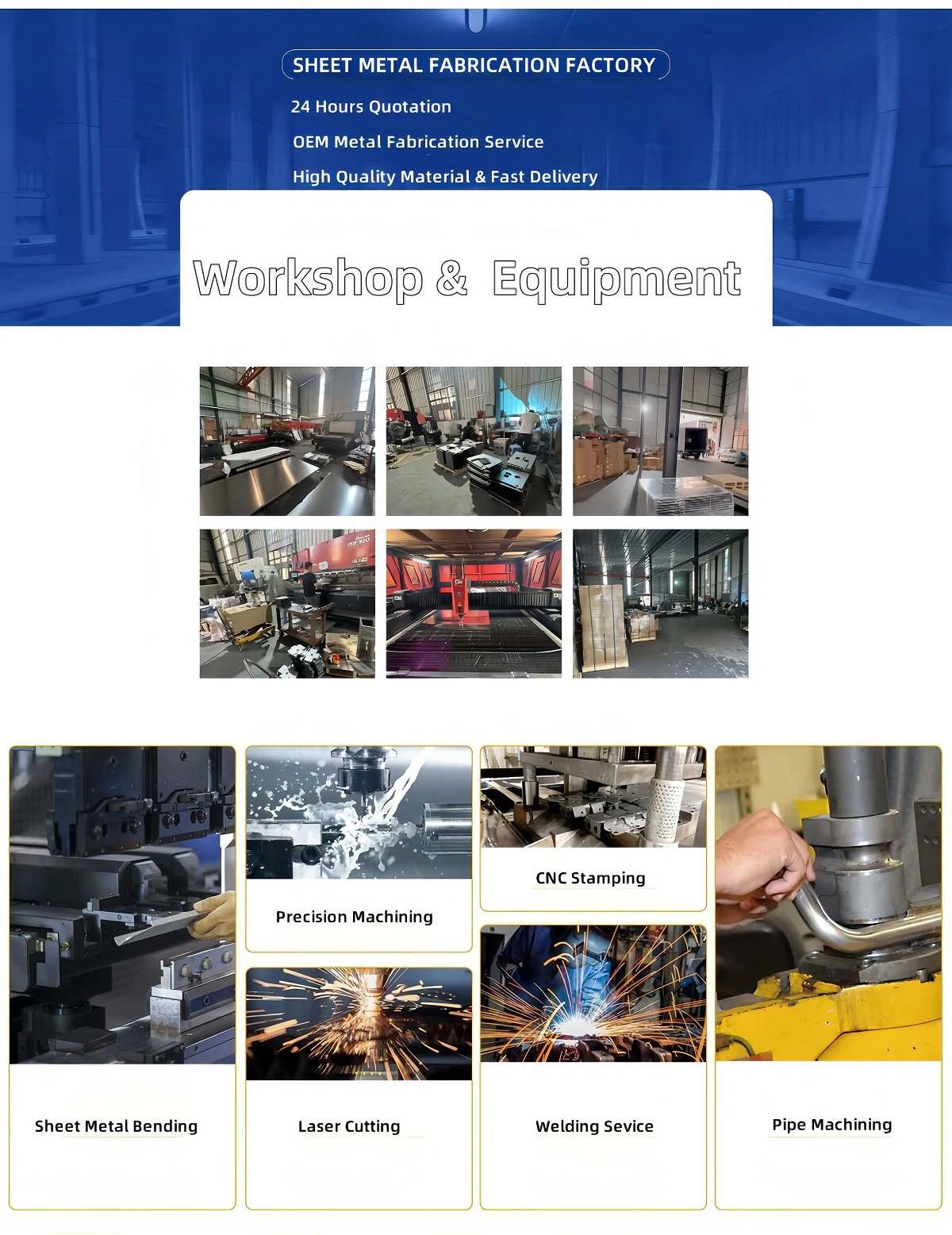
CNC bending is a manufacturing process used to shape metal sheets or plates into desired forms by applying force to bend them at specific angles. This process is typically performed using a CNC (Computer Numerical Control) press brake, which allows for precise and repeatable bending operations.

|
Material |
Carbon steel, stainless steel,SPCC, SGCC, pipe, galvanized steel , aluminum alloy |
|
Processing |
Laser cutting, Bending, Welding, Precision stamping, CNC Punching, Threading, Riveting, Drilling, Assembling, etc. |
|
Thickness |
0.2~20 mm |
|
Tolerance |
+/-0.1mm, 100% QC quality inspection with quality inspection form |
|
Surface Treatment |
Powder coating, Anodizing, Polishing, Brushing, Sandblast, Plating, Silkscreen printing, Zinc chromate, Black Oxide |
|
Drawing Format |
DWG, STEP, SLDPRT, DXF, IGS, 3DS, STL, SKP, AI, PDF, JPG, Draft |
|
Packing |
Wooden Pallet, Wooden case, Bubble wrap, Paperboard, Film, Crate, etc.(As customers' requirement) |
|
Sample Lead Time |
Negotiate delivery time according to your needs |
|
Quotation is according to your drawing(size, material, thickness, processing content, and required technology, etc) |
|

Product Cases


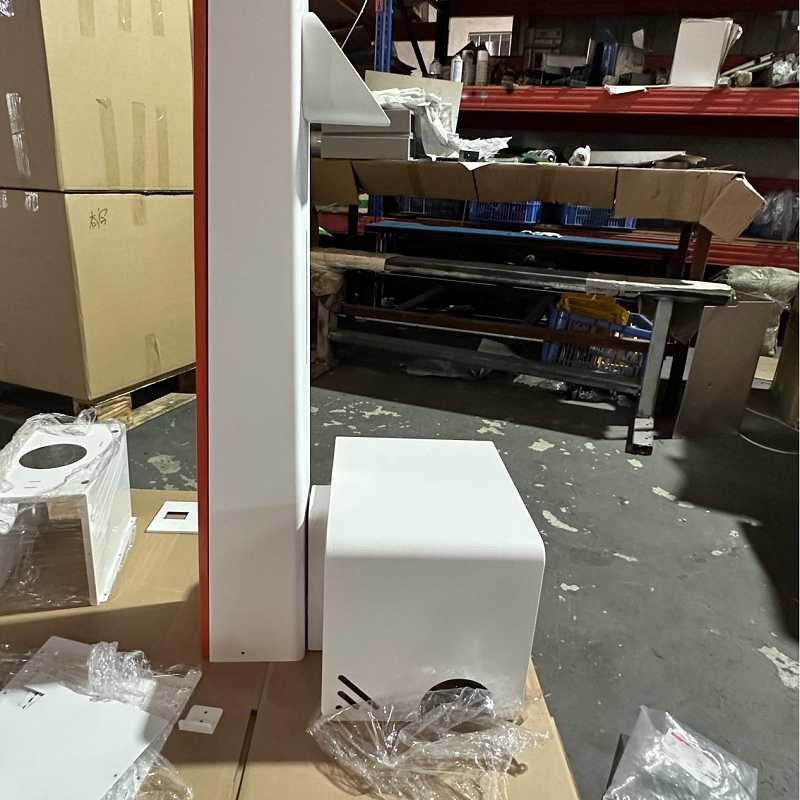


Key Steps in CNC Bending Metal Products
1. Design and Programming:
- The product design is created using CAD (Computer-Aided Design) software.
- The bending sequence and tooling requirements are programmed into the CNC press brake using CAM (Computer-Aided Manufacturing) software.
- The program specifies the bend angles, bend lengths, and tool positions.
2. Material Preparation:
- Metal sheets or plates are cut to the required size using laser cutting, shearing, or other methods.
- The material is often deburred and cleaned to ensure smooth bending.
3. Tooling Setup:
- The appropriate punch and die are selected based on the material type, thickness, and bend requirements.
- Tools are installed on the CNC press brake.
4. Bending Process:
- The metal sheet is positioned on the press brake.
- The CNC machine executes the programmed bending sequence, applying force to create precise bends.
- Multiple bends may be required to achieve the final shape.
5. Quality Control:
- The bent product is inspected for accuracy, including bend angles, dimensions, and surface quality.
- Adjustments are made if necessary to ensure compliance with specifications.

Advantages of CNC Bending
- Precision: CNC technology ensures high accuracy and repeatability.
- Efficiency: Automated processes reduce production time and labor costs.
- Flexibility: Can handle a wide range of materials, thicknesses, and complex geometries.
- Consistency: Produces uniform results across large production runs.
Common Applications of CNC Bent Metal Products
- Enclosures and Cabinets: Electrical boxes, control panels, and server racks.
- Automotive Parts: Brackets, frames, and chassis components.
- Aerospace Components: Structural parts and housings.
- Furniture: Metal frames and supports.
- Industrial Equipment: Machine guards, conveyor systems, and brackets.
Packing&Shipping
Package By carton/crate or as per your requirement