Quality sheet metal welding requires precision, attention to detail, and adherence to best practices to ensure strong, durable, and aesthetically pleasing welds.

|
Material |
Carbon steel, stainless steel,SPCC, SGCC, pipe, galvanized steel , aluminum alloy |
|
Processing |
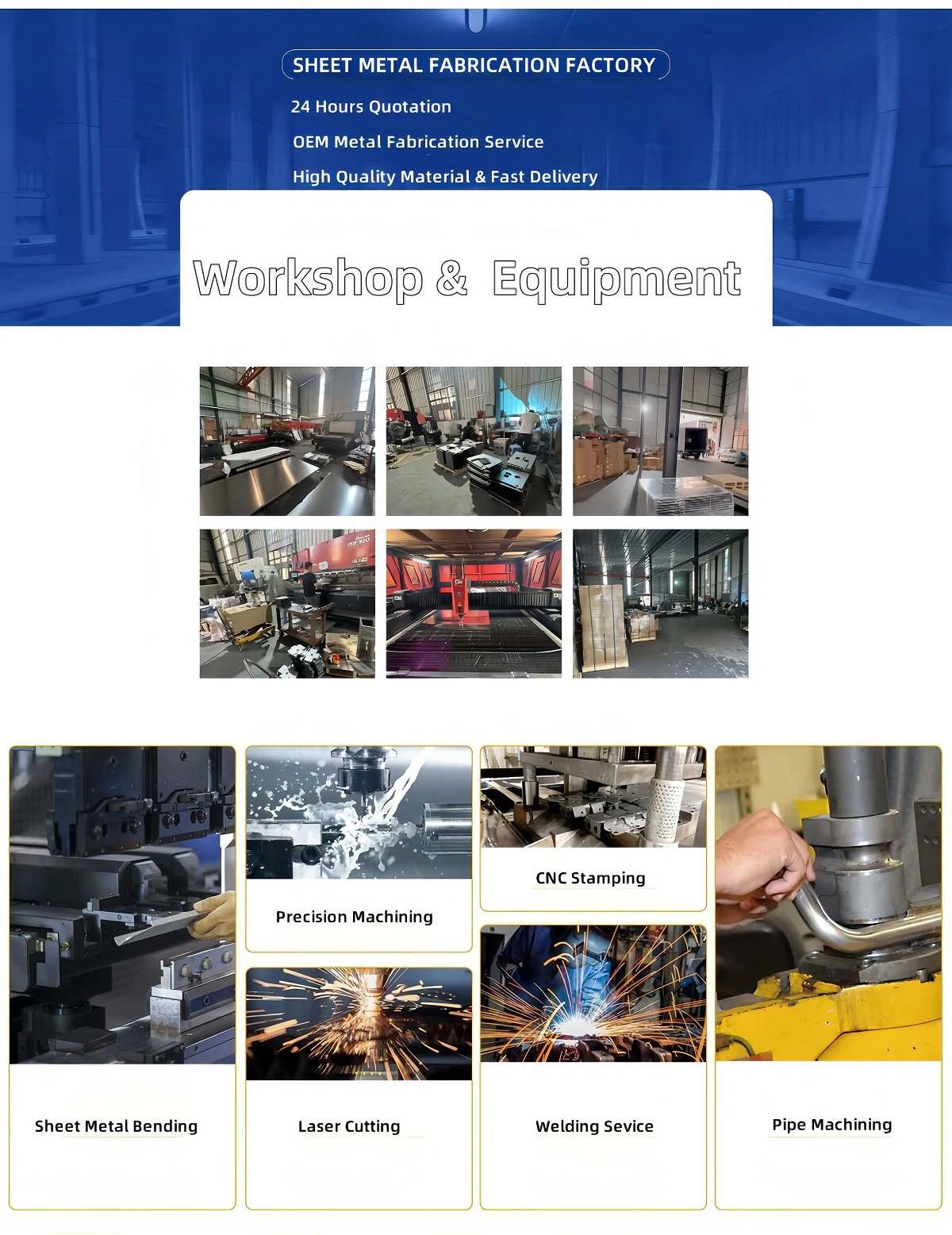
Laser cutting, Bending, Welding, Precision stamping, CNC Punching, Threading, Riveting, Drilling, Assembling, etc. |
|
Thickness |
0.2~20 mm |
|
Tolerance |
+/-0.1mm, 100% QC quality inspection with quality inspection form |
|
Surface Treatment |
Powder coating, Anodizing, Polishing, Brushing, Sandblast, Plating, Silkscreen printing, Zinc chromate, Black Oxide |
|
Drawing Format |
DWG, STEP, SLDPRT, DXF, IGS, 3DS, STL, SKP, AI, PDF, JPG, Draft |
|
Packing |
Wooden Pallet, Wooden case, Bubble wrap, Paperboard, Film, Crate, etc.(As customers' requirement) |
|
Sample Lead Time |
Negotiate delivery time according to your needs |
|
Quotation is according to your drawing(size, material, thickness, processing content, and required technology, etc) |
|

Product Cases


Below are key considerations and tips for achieving high-quality sheet metal welding
- Clean the Metal: Remove any rust, oil, paint, or debris from the welding area using a wire brush, grinder, or chemical cleaner. Contaminants can weaken the weld.
- Proper Fit-Up: Ensure the edges of the sheet metal are properly aligned and fit tightly together. Gaps can lead to burn-through or weak welds.
- Edge Preparation: For thicker sheets, bevel the edges to create a V-groove for better penetration.
2. Welding Process Selection
Choose the appropriate welding process based on the thickness of the sheet metal and the desired finish:
- TIG Welding (GTAW): Ideal for thin sheet metal, providing precise control and clean welds.
- MIG Welding (GMAW): Faster and suitable for thicker sheets, but requires careful heat control.
- Spot Welding: Used for joining overlapping sheets, common in automotive and manufacturing.
- Gas Welding (Oxy-Acetylene): Less common but useful for thin sheets and repairs.
3. Heat Control
- Low Heat Settings: Sheet metal is prone to warping and burn-through, so use lower heat settings and shorter weld beads.
- Pulse Welding: For TIG or MIG, use pulse settings to reduce heat input and minimize distortion.
- Heat Sinks: Use copper or aluminum heat sinks behind the weld area to dissipate heat and prevent warping.
---
4. Welding Technique
- Tack Welds: Use tack welds to hold the pieces in place and prevent misalignment during welding.
- Short Welds: Weld in short bursts to avoid excessive heat buildup.
- Backstepping: Weld in the opposite direction of progress to distribute heat evenly.
- Travel Speed: Maintain a consistent travel speed to ensure even penetration and avoid burn-through.
---
5. Equipment and Consumables
- Thin Wire: Use thinner welding wire (e.g., 0.023-0.030 inches for MIG) for better control on thin sheets.
- Gas Selection: Use the correct shielding gas (e.g., 100% argon for TIG, 75% argon/25% CO2 for MIG).
- Proper Electrodes: Select the right electrode size and type for the material and process.
---
6. Post-Welding Practices
- Grinding and Finishing: Smooth the weld bead with a grinder or file for a clean appearance.
- Stress Relief: Use heat treatment or mechanical methods to relieve residual stress and prevent warping.
- Inspection: Check for defects like cracks, porosity, or incomplete fusion. Use non-destructive testing (NDT) if necessary.

Packing&Shipping
Package By carton/crate or as per your requirement