Sheet metal welding fabrication is a manufacturing process that involves cutting, bending, and assembling sheet metal into various structures or components, often using welding techniques to join the pieces. Sheet metal is typically defined as metal thicker than foil but thinner than plate, usually ranging from 0.006 to 0.25 inches (0.015 to 0.635 cm) in thickness. Common materials used in sheet metal fabrication include steel, stainless steel, aluminum, copper, and brass.

|
Material |
Carbon steel, stainless steel,SPCC, SGCC, pipe, galvanized steel , aluminum alloy |
|
Processing |
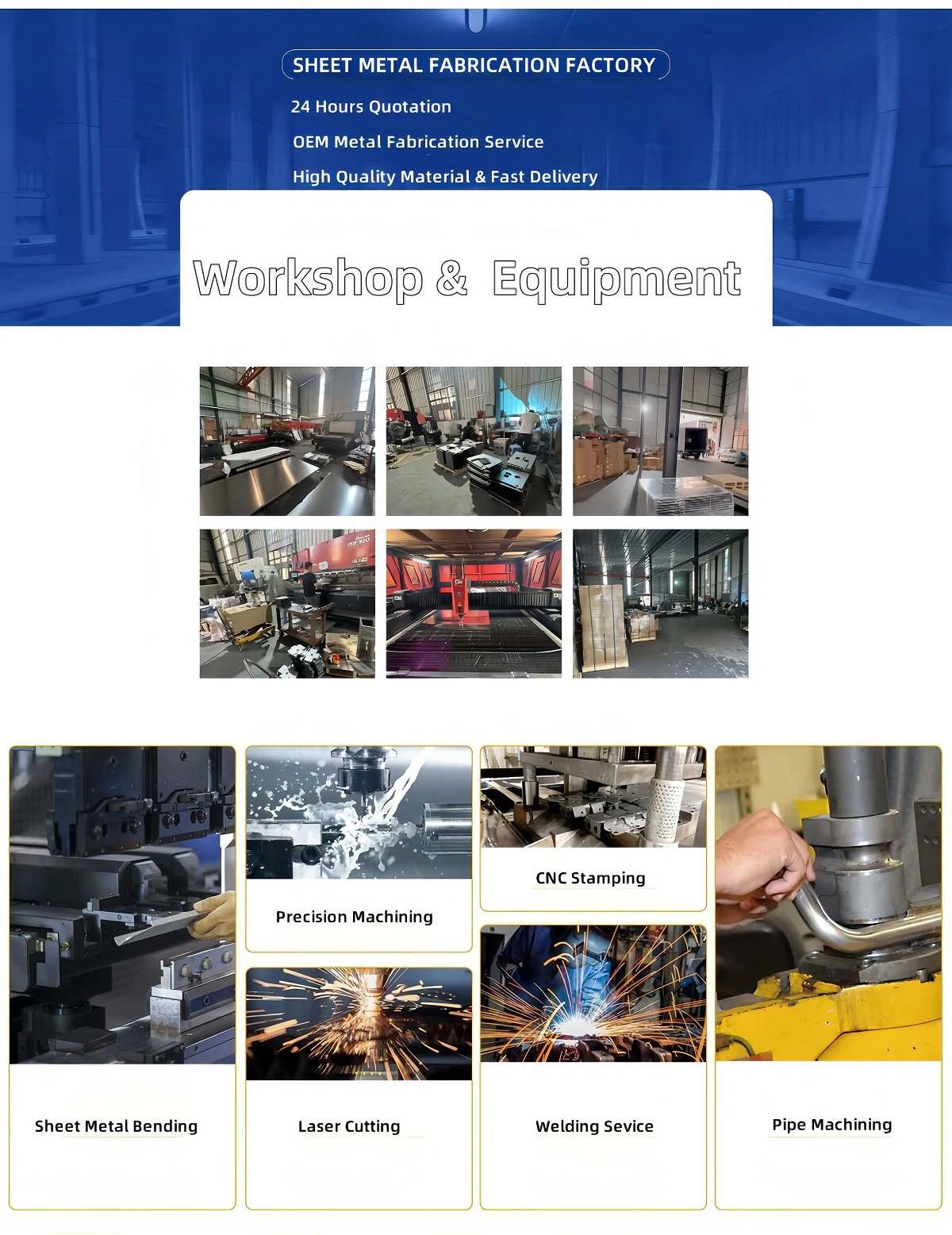
Laser cutting, Bending, Welding, Precision stamping, CNC Punching, Threading, Riveting, Drilling, Assembling, etc. |
|
Thickness |
0.2~20 mm |
|
Tolerance |
+/-0.1mm, 100% QC quality inspection with quality inspection form |
|
Surface Treatment |
Powder coating, Anodizing, Polishing, Brushing, Sandblast, Plating, Silkscreen printing, Zinc chromate, Black Oxide |
|
Drawing Format |
DWG, STEP, SLDPRT, DXF, IGS, 3DS, STL, SKP, AI, PDF, JPG, Draft |
|
Packing |
Wooden Pallet, Wooden case, Bubble wrap, Paperboard, Film, Crate, etc.(As customers' requirement) |
|
Sample Lead Time |
Negotiate delivery time according to your needs |
|
Quotation is according to your drawing(size, material, thickness, processing content, and required technology, etc) |
|

Product Cases


Key Steps in Sheet Metal Welding Fabrication
1. Design and Planning:
- Create detailed engineering drawings or CAD models of the final product.
- Determine material type, thickness, and required tolerances.
- Plan the sequence of operations (cutting, bending, welding, etc.).
2. Cutting:
- Use tools like shears, laser cutters, plasma cutters, or water jets to cut sheet metal into the desired shapes.
- CNC (Computer Numerical Control) machines are often used for precision cutting.
3. Forming and Bending:
- Use press brakes, rollers, or other forming tools to bend or shape the metal.
- Ensure accurate angles and dimensions to fit the design specifications.
4. Welding:
- Join the cut and formed metal pieces using welding techniques such as:
- MIG (Metal Inert Gas) Welding: Common for steel and aluminum.
- TIG (Tungsten Inert Gas) Welding: Ideal for precision welding on thinner materials.
- Spot Welding: Used for joining overlapping sheets.
- Stick Welding: Suitable for thicker materials or outdoor use.
- Ensure proper weld penetration and strength while minimizing distortion.
5. Finishing:
- Grind or sand welds to create smooth surfaces.
- Apply coatings (e.g., paint, powder coating) or finishes (e.g., polishing, anodizing) to protect against corrosion and improve appearance.
6. Assembly:
- Assemble welded components with other parts using fasteners, adhesives, or additional welding.
- Perform quality checks to ensure the final product meets design and functional requirements.

Applications of Sheet Metal Welding Fabrication
- Automotive parts (e.g., body panels, exhaust systems).
- HVAC (Heating, Ventilation, and Air Conditioning) ductwork.
- Aerospace components.
- Construction materials (e.g., roofing, structural frames).
- Consumer products (e.g., appliances, enclosures).
Packing&Shipping
Package By carton/crate or as per your requirement